March 1926
Baptist Hospital Opens
Southern Baptist Hospital opened with a mission to relieve pain, prolong life, and ease suffering. Its founders promised private rooms for charity patients, though access to charity care was limited and tied to church support.
The hospital’s faith in healing and modern technology shaped its identity. The building had its own power plant, refrigeration, and ventilation, but stood in a low-lying part of [New Orleans](entity:location-recall-location-new-orleans-ac6617a07d7e) vulnerable to flooding.
May 2–3, 1926
The 1926 Flood
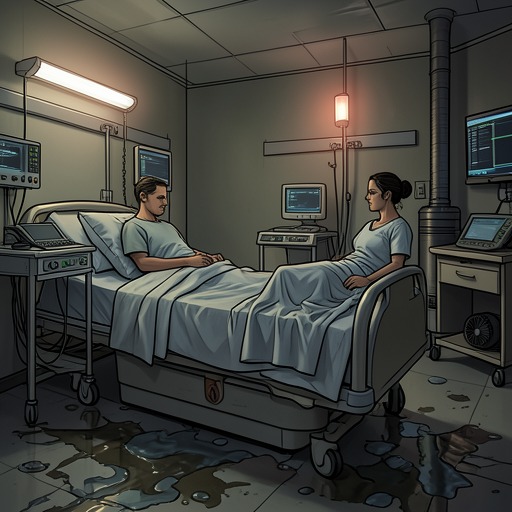
A record-setting rainstorm overwhelmed [New Orleans](entity:location-recall-location-new-orleans-ac6617a07d7e)’s drainage system. Floodwater filled Southern Baptist Hospital’s basement, destroying drugs, food, records, and equipment; staff and firefighters worked to pump it out.
The hospital resumed operations, and officials blamed debris, inadequate infrastructure, and the storm itself. Calls for improvements faded without substantial investment, foreshadowing a recurring pattern of warnings followed by inaction.
April–May 1927
The 1927 Flood
Another historic rainfall and the [Mississippi River](entity:location-recall-location-44b9f53a3db0) flood exposed the limits of [New Orleans](entity:location-recall-location-new-orleans-ac6617a07d7e)’s drainage and levees. Flooding again disrupted Southern Baptist Hospital, where the basement filled with water.
State workers dynamited a levee downstream to spare New Orleans, devastating communities in St. Bernard and Plaquemines parishes. The crisis led to federal flood-control legislation and expanded the Army Corps of Engineers’ role, but the hospital’s neighborhood remained prone to flooding.
1960s–1969
Hospital Integration
Southern Baptist Hospital resisted joining Medicare and other federal programs that required nondiscrimination. Its leaders framed federal oversight as an intrusion, while Black patients remained largely excluded from care there.
The hospital began quietly accepting Black patients in 1968 and joined Medicare in 1969. The change reflected both civil-rights pressure and practical incentives: the number of older patients rose rapidly once Medicare coverage became available.
1960s–1980s
Intensive Care Expands
Memorial’s predecessor expanded intensive care and adopted technologies such as crash carts, piped-in oxygen, and backup power. These advances helped sustain critically ill patients but changed expectations about how long medicine should prolong life.
As health care grew more commercial, doctors including [Horace Baltz](entity:character-recall-character-horace-baltz-3c38980db72e) worried that financial pressures and business thinking could displace professional ethics. End-of-life decisions became more common, but disputes remained over when treatment should stop and who had the authority to decide.
Late 1970s–1997
Pou Chooses Medicine
Raised in a large Catholic [New Orleans](entity:location-recall-location-new-orleans-ac6617a07d7e) family, [Anna Pou](entity:character-recall-character-anna-pou-598a3f245c27) initially left the premedical track to become a medical technologist. At a party, she rapidly revived a young man who had drowned in a pool, an experience that helped draw her back toward medicine.
She returned to medical school at thirty and pursued demanding head-and-neck cancer surgery, including complex reconstruction. After years of training, she built a career centered on patients whose cancers threatened their ability to speak, swallow, and breathe.
1980s–1990s
Baltz Defends Patient Choice
[Horace Baltz](entity:character-recall-character-horace-baltz-3c38980db72e) encouraged colleagues to consider the ethics of life support and helped establish an ethics group at the hospital. He objected to talk of withholding care from [LifeCare](entity:organization-recall-organization-lifecare-9d8f196e00ac) patients simply because they were old or chronically ill.
The debate reflected a wider struggle over the costs of intensive care and the meaning of a life worth preserving. Baltz insisted that doctors had no right to decide who should live based on a patient’s perceived social value.
1997
LifeCare Moves In
[LifeCare](entity:organization-recall-organization-lifecare-9d8f196e00ac) established a long-term acute-care hospital on Memorial’s seventh floor. Its patients often needed ventilators, dialysis, and extended rehabilitation; the company maintained its own staff, administrators, pharmacy, and supply chain.
The arrangement placed a separate hospital within Memorial, creating overlapping responsibilities that would become consequential during the disaster. Some Memorial doctors questioned the resources devoted to these patients, while Baltz defended their right to care.
2004
Pou Returns to New Orleans
After working in [Galveston](entity:location-recall-location-145c49304984), [Anna Pou](entity:character-recall-character-anna-pou-598a3f245c27) accepted a position at [Louisiana State University](entity:organization-recall-organization-c2621de1cd38) and joined Memorial’s medical staff. Memorial helped secure funding for her recruitment, while she also treated patients at [Charity Hospital](entity:location-recall-location-charity-hospital-680e73d2eb62) and served the poor.
Pou returned to a hospital where she had to establish herself among colleagues. Nurses initially doubted that the small surgeon could endure long operations, but her patient advocacy and demanding surgical work gradually won respect.
August 26–27, 2005
Katrina Approaches
As [Hurricane Katrina](entity:event-recall-event-hurricane-katrina-a0ce9b3487b1) strengthened in the Gulf, [Gina Isbell](entity:character-recall-character-gina-isbell-df0805126c6e) helped move nineteen [LifeCare](entity:organization-recall-organization-lifecare-9d8f196e00ac) patients from its single-story [Chalmette](entity:location-recall-location-e03dd106b984) campus to the seventh floor of Memorial. One patient died during the transfer; the others arrived with their medicines and essential equipment.
The move proved prudent as forecasts worsened. LifeCare’s patients were placed in a hospital they expected to be safer, but many remained dependent on power and specialized care that the coming emergency would threaten.
August 28, 2005
Mandatory Evacuation Order
With Katrina forecast to strike as a catastrophic hurricane, [Ray Nagin](entity:character-recall-character-ray-nagin-cb64394e20ab) ordered [New Orleans](entity:location-recall-location-new-orleans-ac6617a07d7e) residents to evacuate. People without cars were directed toward the Superdome, but the order exempted hospitals and their workers.
Officials had already recognized that many local hospitals had generators or electrical equipment at ground level. Yet no workable regional plan existed to move thousands of hospital patients from a flooded city, despite the recent Hurricane Pam exercise.
August 28, 2005
The Hospital Fills
Staff, families, patients, and neighbors gathered at Memorial as the storm approached. Around 183 Memorial patients, 55 [LifeCare](entity:organization-recall-organization-lifecare-9d8f196e00ac) patients, hundreds of workers, and their companions were inside the complex.
[Anna Pou](entity:character-recall-character-anna-pou-598a3f245c27) stayed at Memorial despite urging others to leave. She had no family or pets with her and prepared operating rooms in case emergency surgery became necessary, then prayed as the hurricane arrived.
August 29, 2005
Katrina Strikes
Katrina passed over the [New Orleans](entity:location-recall-location-new-orleans-ac6617a07d7e) area as a weakened but still dangerous hurricane. Windows shattered at Memorial, rain entered the building, and staff moved patients away from exposed rooms while the air-conditioning failed.
The hospital’s generators initially kept critical systems running, but they could not power the air-conditioning. Staff moved food and pets out of the basement as water rose, and the hospital appeared to have survived the storm itself.
August 30, 2005
Floodwaters Return
After the streets had briefly dried, floodwater surged back into [New Orleans](entity:location-recall-location-new-orleans-ac6617a07d7e) through breached canals. It poured from sewer vents near Memorial and advanced toward the hospital, contradicting the staff’s belief that the worst had passed.
Plant operations director [Eric Yancovich](entity:character-recall-character-eric-yancovich-ae858842aec2) knew the hospital’s backup system had vulnerable switches and electrical equipment near ground level. The generators might remain above water, but the power that connected them to patient-care areas could fail.
August 30, 2005
Survival Mode
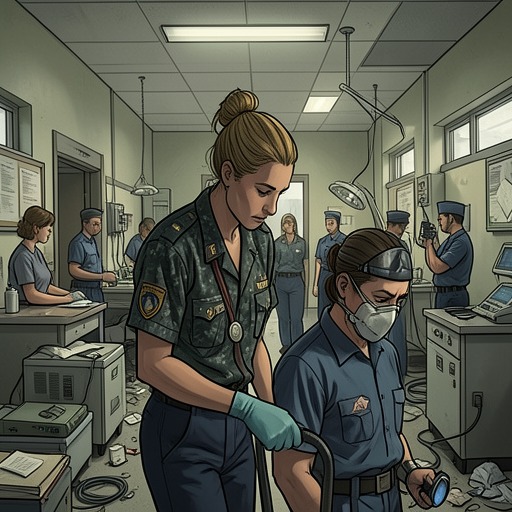
[Susan Mulderick](entity:character-recall-character-susan-mulderick-c896e275bd3d)’s command team shifted Memorial into survival mode, anticipating more flooding and a possible evacuation. They halted elective care, tried to discharge stable patients, counted supplies, and sought nurses able to provide dialysis.
The hospital had no detailed plan for evacuation through flooded streets or for a complete power failure. Its extensive emergency binders had not joined the separate hazards into a realistic all-hazards response.
August 30, 2005
The Helipad Opens
A military Black Hawk landed on Memorial’s aging helipad after [Paul Primeaux](entity:character-recall-character-paul-primeaux-c9f1f831d78c) waved to its pilot. The pad held, and the hospital sent one newborn away, but the journey up the garage stairs was so slow that the pilot warned staff to find a better method.
The heliport’s elevators and landing lights were not connected to emergency power. What had once been designed as direct access from the hospital had become a difficult, uncertain route for rescuing patients.
August 30, 2005
Patients Leave by Truck
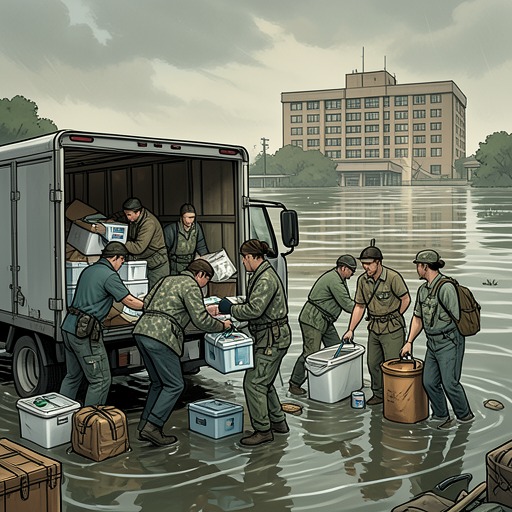
As water rose around Memorial, staff loaded patients onto National Guard troop haulers. [Anna Pou](entity:character-recall-character-anna-pou-598a3f245c27) helped move people from the emergency room toward trucks bound for hospitals in Texas.
The truck beds sat only slightly above the floodwater, and the rising streets narrowed the window for evacuation by road. A second group was expected to follow, but the water soon made that route unusable.
August 30, 2005
Neonatal Evacuation
Staff carried newborns and critically ill infants toward the helipad, maneuvering transport incubators up garage ramps and staircases. When the expected Coast Guard helicopters failed to arrive promptly, neonatologist [Juan Jorge Gershanik](entity:character-recall-character-juan-jorge-gershani-7fa7a9b980fe) feared the babies would not survive if the power failed.
Gershanik eventually took a premature infant in his arms aboard a small helicopter, manually ventilating him during the flight. The babies reached care in [Baton Rouge](entity:location-recall-location-baton-rouge-aa3c62d8f78f) alive, demonstrating both the danger of the evacuation and the possibility of improvisation.
August 30, 2005
LifeCare Awaits Rescue
[LifeCare](entity:organization-recall-organization-lifecare-9d8f196e00ac) administrators struggled to learn whether their patients were included in evacuation plans. Messages passed between Memorial, the company’s [Shreveport](entity:location-recall-location-88819348e9a8) office, and people mistakenly believed to represent FEMA.
Memorial’s patients were being prioritized first, while LifeCare’s much sicker patients remained on the seventh floor. Confusion over who was coordinating rescue left LifeCare staff waiting for assurances that never became a reliable plan.
Late August 30–early August 31, 2005
The Night Airlift Stops
The Coast Guard offered to continue taking patients from Memorial through the night. Hospital leaders declined, believing that darkness, fatigue, and the hazardous helipad made further movement too dangerous; they told rescuers to return in the morning.
The decision left seven [LifeCare](entity:organization-recall-organization-lifecare-9d8f196e00ac) patients who depended on ventilators inside the hospital. The evacuation effort had already shown that helicopters were available, but fragmented communications and local judgments interrupted the rescue.
August 31, 2005, around 2 a.m.
Generators Fail
Memorial’s three backup generators began failing after nearly two days of operation. Maintenance workers tried repairs and improvised electrical connections, but flooding and damaged equipment undermined the system.
The last generator died, leaving the hospital dark and hot. Ventilators and electronic equipment continued only on batteries, and the loss of power transformed the evacuation from a difficult operation into a race against the collapse of basic care.
August 31, 2005, early morning
Coast Guard Calls Again
Coast Guard personnel repeatedly tried to reach Memorial and offered helicopters for the remaining critical patients. A nurse carried messages between floors, but hospital leaders remained uncertain about the offer and hesitant to restart the evacuation in darkness.
[Karen Wynn](entity:character-recall-character-karen-wynn-66b1616f5629) and [Thao Lam](entity:character-recall-character-thao-lam-b12c691f018e) eventually helped [LifeCare](entity:organization-recall-organization-lifecare-9d8f196e00ac) staff carry ventilator-dependent patients down the stairs. Workers manually squeezed [Ambu bags](entity:object-recall-object-ambu-bags-a27706277dae) as they maneuvered patients through a small opening in the machine room wall toward the garage.
August 31, 2005, early morning
Russell Dies in Transit
[John Russell](entity:character-recall-character-john-russell-4514fe04a344) suffered cardiac arrest after the generators failed. [Gina Isbell](entity:character-recall-character-gina-isbell-df0805126c6e) manually ventilated him as he was carried downstairs, but a doctor said there was no oxygen available and told her to stop.
Believing the doctor, Isbell stopped ventilating and comforted Russell as he died. She later grieved in the chapel with [John Marse](entity:character-recall-character-john-marse-1470d12b8e5a), a first sign of how equipment shortages and uncertain information were turning rescue into loss.
August 31, 2005, morning
Patients Are Sorted
As the evacuation resumed, doctors and nurses divided patients into categories: those who could walk or sit up went first, patients needing more assistance followed, and the sickest were assigned last. DNR patients were placed in the final group.
The improvised system had no clear protocol, public explanation, or meaningful reassessment. A DNR instruction meant not to resuscitate after cardiac or respiratory arrest, not that a patient should be denied rescue, but staff treated it as a marker of lower priority.
August 31, 2005, morning
Families Challenge DNR Priority
A daughter learned that her mother was being left behind because of a DNR order and demanded that the order be canceled. The patient was moved toward evacuation after the family clarified that the instruction against resuscitation did not mean refusal of rescue.
On [LifeCare](entity:organization-recall-organization-lifecare-9d8f196e00ac), [Angela McManus](entity:character-recall-character-angela-mcmanus-592b1ff72b25) tried to rescind [Wilda McManus](entity:character-recall-character-wilda-mcmanus-9b38e8d15aca)’s DNR order but could not find a doctor to do it. Wilda remained upstairs, illustrating how a medical directive could be misread as permission to abandon a patient.
August 31, 2005, morning
Airboats Reach Memorial
Mark and [Sandra LeBlanc](entity:character-recall-character-sandra-leblanc-73029c7e9a17) reached Memorial by airboat to find Mark’s mother, Vera, lying in the heat on the seventh floor. They brought additional boats and offered to organize transport, while [LifeCare](entity:organization-recall-organization-lifecare-9d8f196e00ac)’s administrators struggled to arrange ambulances at a staging point.
Their arrival gave patients a route out that did not depend on helicopters. It also exposed how little coordination existed between the hospital, private rescuers, and the companies responsible for patient transport.
August 31, 2005, late morning
The Evacuation Queue
Patients were brought from wards to staging areas in the second-floor lobby, corridors, and the emergency ramp. Those categorized as more mobile were sent first; the sickest, including many DNR patients, waited near an ATM and planter.
Medical treatment largely gave way to basic care: water, fanning, changing diapers, and keeping patients as comfortable as possible. The numbered categories risked becoming destinies as patients, families, and many staff members were not told what the system meant.
August 31, 2005, late afternoon
Vera Leaves by Airboat
After hours in the lobby, [Vera LeBlanc](entity:character-recall-character-vera-leblanc-f5d398fee560) was still waiting while her son and daughter-in-law watched the evacuation stall. Mark and Sandra decided to carry her to an airboat despite objections from doctors who had placed her near the end of the line.
Vera demanded water and spoke as she was carried toward the ramp. Her rescue became a direct challenge to the hospital’s triage order: her family chose not to accept the judgment that she should wait.
August 31, 2005, evening
Families Leave Without Patients
Boats carried workers, relatives, and patients who could leave with little assistance. Some family members were told their loved ones would soon follow, but many remained inside Memorial or on the seventh floor of [LifeCare](entity:organization-recall-organization-lifecare-9d8f196e00ac).
[Angela McManus](entity:character-recall-character-angela-mcmanus-592b1ff72b25) left after being assured that her mother would be evacuated. [Kathryn Nelson](entity:character-recall-character-kathryn-nelson-eafc19dc5ed8) also departed, reluctant to leave her mother Elaine. Both women would later discover that their mothers had not been taken with them.
September 1, 2005, morning
A Plan to Medicate Patients
[Susan Mulderick](entity:character-recall-character-susan-mulderick-c896e275bd3d) asked [Anna Pou](entity:character-recall-character-anna-pou-598a3f245c27) what might be done for patients suffering in the lobby. [Ewing Cook](entity:character-recall-character-ewing-cook-fbc15a0febb0) then spoke with Pou about morphine and sedatives, explaining that high doses could reduce breathing and hasten death.
The conversation took place as evacuation had resumed and helicopters and boats were available, though staff believed many patients would not survive transport. The distinction between comfort care and intentionally ending life became central to what followed.
September 1, 2005, morning
LifeCare Staff Are Sent Away
[Anna Pou](entity:character-recall-character-anna-pou-598a3f245c27) and other Memorial staff went to the seventh floor and discussed the remaining [LifeCare](entity:organization-recall-organization-lifecare-9d8f196e00ac) patients, including [Emmett Everett](entity:character-recall-character-emmett-everett-452c3444cb9e), who was conscious and weighed about 380 pounds. LifeCare leaders recalled being told that the patients would not survive and that lethal doses would be given.
[Diane Robichaux](entity:character-recall-character-diane-robichaux-c8102f313cbc) and [Therese Mendez](entity:character-recall-character-therese-mendez-a29b3ce6a3c6) cleared LifeCare staff from the floor. [Andre Gremillion](entity:character-recall-character-andre-gremillion-44b19e9d65e6) refused a request to sedate Everett and left in tears. The departure removed patient advocates and witnesses from the room before the injections began.
September 1, 2005, morning to afternoon
The Seventh-Floor Injections
[Anna Pou](entity:character-recall-character-anna-pou-598a3f245c27) and two Memorial nurses went from room to room on [LifeCare](entity:organization-recall-organization-lifecare-9d8f196e00ac)’s seventh floor, administering morphine and sedatives. [Kristy Johnson](entity:character-recall-character-kristy-johnson-ba15fd1c432b) later told investigators that she witnessed injections, including one at [Wilda McManus](entity:character-recall-character-wilda-mcmanus-9b38e8d15aca)’s bedside, and heard a patient say that the injection burned.
The patients had survived the preceding days and some had been described as stable or alert. All nine remaining LifeCare patients died that day. Their deaths and the uncertain purpose of the injections became the core of the criminal investigation.
September 1, 2005, late morning to afternoon
DNR Patients Receive Drugs
On the second floor, staff gave morphine and midazolam to some of the DNR patients who had been assigned last for evacuation. [John Thiele](entity:character-recall-character-john-thiele-b37a2f0f541e) asked [Karen Wynn](entity:character-recall-character-karen-wynn-66b1616f5629) whether they could do it; Wynn believed medication was necessary to ease the patients’ breathing and distress.
Thiele injected several patients, prayed with one man who continued to breathe, and eventually covered the man’s face with a towel. Other staff members, including [Anna Pou](entity:character-recall-character-anna-pou-598a3f245c27), were also involved in medication decisions, while some nurses believed the doses were hastening deaths rather than merely relieving symptoms.
September 1, 2005, afternoon
Merle Lagasse Dies
[Merle Lagasse](entity:character-recall-character-merle-lagasse-223f2f846983) struggled to breathe while awaiting evacuation. [Roy Culotta](entity:character-recall-character-roy-culotta-4150579c3b50) believed she was actively dying and ordered morphine and sedatives; he later acknowledged that the drugs hastened her death, though he said he intended to relieve her distress.
Her daughter Karen had earlier pleaded for her oxygen mask to remain in place as Merle was moved through the machine-room opening. The separation, medication, and death became a lasting source of grief and a subject of civil litigation.
September 1, 2005, afternoon
The Sickest Patients Wait
As mobile people departed, the sickest patients remained in the hot lobby and on the garage roof. [Cathy Green](entity:character-recall-character-cathy-green-1e39ecad9a2c) found an elderly patient with an empty oxygen tank and was told she would not be moved because she was dying.
Other patients cried for water or help, while staff struggled with dehydration, heat, sewage, and exhaustion. Some workers believed there was no way to save these patients; others argued that they had survived this long and still deserved every available chance.
September 1, 2005, evening
The Last Patient Leaves
Rescue continued by air and water, and [Rodney Scott](entity:character-recall-character-rodney-scott-e249c5fcfca2) was eventually carried through the machine-room opening and up to the helipad. He had been delayed because of his size, but he survived the trip and left Memorial alive.
His evacuation undercut the belief that the largest or most difficult patients could not be moved. It also marked the last living patient’s departure from the hospital, though many people inside still did not know what had happened to the patients who had died.
September 6–11, 2005
Bodies Found in the Chapel
Days after staff and patients left, reporters and rescue workers found bodies in Memorial’s chapel and elsewhere in the hospital. A disaster mortuary team recovered forty-five bodies from the building, the largest number found at any Katrina-struck hospital or nursing home.
The discovery shocked families and prompted questions about the deaths, the hospital’s preparedness, and the decisions made during evacuation. [Anna Pou](entity:character-recall-character-anna-pou-598a3f245c27) publicly described the dead as critically ill patients with DNR orders and said staff had tried to keep them comfortable.
September–October 2005
Families Search for the Missing
Families struggled to locate relatives who had been separated from them during evacuation. [Carrie Everett](entity:character-recall-character-carrie-everett-370e06882b30) searched for Emmett, [Linette Burgess Guidi](entity:character-recall-character-linette-burgess-gui-b639afc2507a) searched for Jannie, and other relatives received little information as bodies remained unrecovered and records were difficult to obtain.
The delay compounded the disaster’s trauma. Tenet later instructed employees to speak generally with families and avoid opinions, while relatives still lacked clear explanations about when and how their loved ones had died.
September 2005
The State Opens an Investigation
[Louisiana](entity:location-recall-location-e662c8ad18f8) Attorney General [Charles Foti](entity:character-recall-character-charles-foti-58a769f0725a)’s [Medicaid Fraud Control Unit](entity:organization-recall-organization-medicaid-fraud-c-cddf0823f5e1) began investigating deaths at hospitals and nursing homes. [LifeCare](entity:organization-recall-organization-lifecare-9d8f196e00ac) reported that nine patients on Memorial’s seventh floor had died under suspicious circumstances after receiving morphine.
Prosecutor [Butch Schafer](entity:character-recall-character-butch-schafer-f7f85f656faf) and investigator [Virginia Rider](entity:character-recall-character-virginia-rider-38c8ed7eb391) began interviewing witnesses. The allegation that medical professionals might have intentionally hastened patients’ deaths was unexpected, and investigators initially had to determine whether the accounts reflected crime, misunderstanding, or emergency comfort care.
September–October 2005
Witness Accounts Converge
[LifeCare](entity:organization-recall-organization-lifecare-9d8f196e00ac) administrators and employees told investigators that Pou had described lethal doses and asked staff to leave the floor. Their accounts varied in detail, but several said the decision seemed to come from a higher authority and that the patients were to be medicated before evacuation ended.
Investigators also heard from Memorial physician [Bryant King](entity:character-recall-character-bryant-king-66eeb7e7f27c), who said he had seen Pou carrying syringes and had understood that euthanasia was being discussed. The accounts raised questions about memory, rumor, and the difference between firsthand observation and what witnesses had heard from others.
October 1, 2005
Memorial Is Searched
[Virginia Rider](entity:character-recall-character-virginia-rider-38c8ed7eb391), [Butch Schafer](entity:character-recall-character-butch-schafer-f7f85f656faf), and a large state and federal team searched the dark, damaged hospital under warrant. Investigators seized medication records, syringes, morphine, and the prescriptions signed by [Anna Pou](entity:character-recall-character-anna-pou-598a3f245c27).
They found a bag of syringes in the garbage in [LifeCare](entity:organization-recall-organization-lifecare-9d8f196e00ac) room 7305 and other drug supplies on the seventh floor and in the second-floor lobby. The evidence supported the witnesses’ claims that medications had been prepared and administered, though it did not by itself establish intent.
October 6, 2005
Toxicology Results Match Names
Forensic toxicologist [Robert Middleberg](entity:character-recall-character-robert-middleberg-8742cb409fa1) told investigators that several Memorial patients’ tissue samples contained morphine or midazolam. The positive results included the names of [LifeCare](entity:organization-recall-organization-lifecare-9d8f196e00ac) patients identified by witnesses as having been injected, though the samples had been degraded by heat and decomposition.
The match strengthened the suspicion that the drugs had been given shortly before death. It did not resolve whether they caused the deaths or whether the clinicians had intended to kill, issues that would remain disputed throughout the investigation.
October–December 2005
Media Reports Name Pou
[CNN](entity:organization-recall-organization-cnn-fc1d8abce1ee) and other outlets reported allegations of mercy killings at Memorial. [Bryant King](entity:character-recall-character-bryant-king-66eeb7e7f27c) described seeing Pou with syringes, while Pou’s identity was initially withheld; later reports named her and intensified public scrutiny.
Pou’s attorney [Rick Simmons](entity:character-recall-character-rick-simmons-d113f628f868) advised her not to speak freely with the media. The story became a national argument about disaster, euthanasia, government abandonment, and whether compassionate intent could justify medication that might hasten death.
December 2005–January 2006
Forensic Experts Review Deaths
Forensic pathologist [Cyril Wecht](entity:character-recall-character-cyril-wecht-bc184a8de3d2) reviewed cases from [LifeCare](entity:organization-recall-organization-lifecare-9d8f196e00ac) and concluded that morphine had caused or substantially contributed to deaths in four patients. He considered the drug levels high and inconsistent with documented prescriptions.
Later review of more cases produced disagreement among experts. Some classified the deaths as homicides, while others emphasized decomposition, underlying illness, and uncertainty about postmortem drug levels. The scientific dispute left the legal case dependent on evidence of intent and on the quality of incomplete medical records.
Late 2005–early 2006
Pou and Thiele Seek Counsel
[Anna Pou](entity:character-recall-character-anna-pou-598a3f245c27) and [John Thiele](entity:character-recall-character-john-thiele-b37a2f0f541e) faced mounting legal uncertainty after speaking with Tenet’s attorneys, who did not represent them personally. Pou obtained counsel from [Rick Simmons](entity:character-recall-character-rick-simmons-d113f628f868), while Thiele struggled to pay for his own defense.
Both feared that their statements could be used against them. Tenet’s corporate interests, the clinicians’ individual legal exposure, and the state’s investigation increasingly pulled in different directions.
2006
The Investigation Broadens
[Virginia Rider and Butch Schafer](entity:relation-recall-relation-virginia-rider-and-b-ef17c0177281) examined additional Memorial deaths and interviewed employees, families, and physicians. Toxicology and autopsy findings suggested that morphine or midazolam had been present in many bodies, not only the four cases initially central to the arrest theory.
The investigation also encountered missing or incomplete records, wary witnesses, and legal resistance. Families sought explanations, while Tenet employees were encouraged to consult company counsel before speaking with investigators or the press.
July 17, 2006
Pou Is Arrested
[Virginia Rider](entity:character-recall-character-virginia-rider-38c8ed7eb391) led agents who arrested [Anna Pou](entity:character-recall-character-anna-pou-598a3f245c27) at her [Baton Rouge](entity:location-recall-location-baton-rouge-aa3c62d8f78f) home after a judge signed warrants accusing her and nurses [Cheri Landry](entity:character-recall-character-cheri-landry-a681f54baa81) and [Lori Budo](entity:character-recall-character-lori-budo-62fbaa35252e) of four counts of second-degree murder. Pou was taken to prison, fingerprinted, and booked before being released on bond.
The surprise arrests angered the defendants’ supporters and strained relations between investigators and defense lawyers. Attorney General [Charles Foti](entity:character-recall-character-charles-foti-58a769f0725a) announced the charges publicly, describing the drug combination as a lethal cocktail, a claim criticized by medical experts as oversimplified.
July–October 2006
A Defense Campaign Forms
Pou’s attorney, [Rick Simmons](entity:character-recall-character-rick-simmons-d113f628f868), argued that she had acted heroically under desperate circumstances and that the state had abandoned Memorial. [Dan Nuss](entity:character-recall-character-dan-nuss-1687f4ebcaab) organized a defense fund, and colleagues and professional groups issued statements portraying Pou and the nurses as devoted caregivers.
The defense emphasized the hospital’s heat, darkness, delayed rescue, and collapsing systems. It also challenged the investigators’ evidence and criticized Foti’s public statements, while several families of deceased patients continued to demand answers.
October 2006–January 2007
LifeCare Witnesses Testify
[LifeCare](entity:organization-recall-organization-lifecare-9d8f196e00ac) witnesses described Pou’s visit to the seventh floor and repeated their recollection that she had spoken of lethal doses. [Kristy Johnson](entity:character-recall-character-kristy-johnson-ba15fd1c432b) eventually supplied a crucial account: she had accompanied Pou and nurses to patient bedsides and witnessed some injections.
[Steven Harris](entity:character-recall-character-steven-harris-be6719a2c5c8) said he had supplied morphine, midazolam, and injection materials. The testimony gave investigators a direct witness to events previously supported mainly by circumstantial evidence, though memories still differed over wording, timing, and who had been present.
2006–early 2007
Minyard Weighs the Cases
Coroner [Frank Minyard](entity:character-recall-character-frank-minyard-c97af1fdc417) consulted forensic pathologists and other experts on the deaths. Several concluded that drugs had caused or contributed to deaths among the [LifeCare](entity:organization-recall-organization-lifecare-9d8f196e00ac) patients, while toxicologist [Steven Karch](entity:character-recall-character-steven-karch-41c2342d532e) argued that postmortem drug levels could not reliably establish what patients had received before death.
Minyard also faced local pressure and worried about the effect a homicide ruling would have on [New Orleans](entity:location-recall-location-new-orleans-ac6617a07d7e). He struggled to reconcile scientific evidence, personal loyalties, religious convictions, and the prospect of a highly publicized trial.
February 1, 2007
Coroner Finds No Homicide
[The Times-Picayune](entity:organization-recall-organization-the-times-picayu-f78dd62cce30) reported that [Frank Minyard](entity:character-recall-character-frank-minyard-c97af1fdc417) had found no evidence of homicide, a decision that stunned [Virginia Rider and Butch Schafer](entity:relation-recall-relation-virginia-rider-and-b-ef17c0177281). Rider confronted Minyard, who said public support for Pou and concern for the city’s reputation influenced his judgment.
The announcement did not end the case, but it weakened the prosecutors’ position. Minyard continued to wrestle with the evidence and later considered some deaths, particularly [Emmett Everett](entity:character-recall-character-emmett-everett-452c3444cb9e)’s, more clearly attributable to drugs than others.
February–July 2007
The Grand Jury Investigates
A special grand jury heard evidence about the Memorial deaths. The [Orleans Parish](entity:location-recall-location-orleans-parish-8d68c48768b0) prosecutor [Michael Morales](entity:character-recall-character-michael-morales-6d441c229eeb) proceeded cautiously, treating the case as an investigative inquiry rather than presenting it as a routine request for indictment.
Memorial nurses testified under immunity, while key [LifeCare](entity:organization-recall-organization-lifecare-9d8f196e00ac) witnesses, families, forensic experts, and other doctors were not all called. The gaps in testimony became consequential: jurors later said they had not heard an eyewitness testify that Pou herself injected a patient.
July 17, 2007
Supporters Rally for Pou
Hundreds gathered at City Park after radio host Garland Robinette called for support for [Anna Pou](entity:character-recall-character-anna-pou-598a3f245c27) and the nurses. Speakers warned that prosecuting health professionals for serving during Katrina could drive medical workers from [Louisiana](entity:location-recall-location-e662c8ad18f8).
The rally reflected intense public sympathy for the clinicians and anger at [Charles Foti](entity:character-recall-character-charles-foti-58a769f0725a). [Horace Baltz](entity:character-recall-character-horace-baltz-3c38980db72e) saw the event differently, believing that the defense campaign threatened the community with abandonment unless the prosecution stopped.
July 24, 2007
The Grand Jury Declines Charges
Ten grand jurors voted not to indict [Anna Pou](entity:character-recall-character-anna-pou-598a3f245c27) on one count of second-degree murder and nine counts of conspiracy. They had been asked whether the evidence showed specific intent to kill.
The decision ended the criminal case in [New Orleans](entity:location-recall-location-new-orleans-ac6617a07d7e), though it did not settle what had happened at Memorial. Some jurors believed a crime had occurred but felt the prosecution had not produced the direct evidence needed to connect Pou to an injection.
2005–2007
Other Hospital Cases Surface
Investigations and reporting revealed troubling circumstances at St. Rita’s, Lindy Boggs, Touro, and other facilities. Some patients drowned or died after power failed; allegations also arose that some patients had been left behind or given morphine.
At [Charity Hospital](entity:location-recall-location-charity-hospital-680e73d2eb62), staff kept care going with portable generators, improvised resources, and regular communication, and fewer patients died. The contrasts showed that disaster outcomes were not determined by the storm alone; preparation, leadership, and decisions mattered.
2006–2007
Pou Returns to Surgery
[Anna Pou](entity:character-recall-character-anna-pou-598a3f245c27) gradually returned to surgery while the criminal case remained unresolved. She continued treating [James O’Bryant](entity:character-recall-character-james-o-bryant-26b734ac229d), whose recurrent cancer required increasingly difficult operations, and maintained a close relationship with his family.
Pou’s supporters used her record as a surgeon and patient advocate to counter the allegations. Her supporters’ narrative gained influence, while she avoided publicly describing whether she had injected patients or what she believed her actions meant.
2007
Professional Groups Back Pou
Medical organizations publicly supported Pou and argued that her case exposed the legal risks faced by clinicians during disasters. In Chicago, [Rick Simmons](entity:character-recall-character-rick-simmons-d113f628f868) urged the [American Medical Association](entity:organization-recall-organization-4d30ee7b2aaf) to promote legal protections for medical workers who make difficult decisions during emergencies.
The association voted to develop model legislation shielding disaster responders from liability under specified conditions. The public debate centered on protection for triage decisions, while the underlying allegations about patient injections remained unresolved.
January 2010
The Haiti Oxygen Decision
After the [Haiti](entity:location-recall-location-e3cf92455220) earthquake, an American disaster team treated [Nathalie LeBrun](entity:character-recall-character-nathalie-lebrun-75c4010223b0), whose chronic heart condition made her dependent on oxygen. A liaison officer decided the scarce oxygen should go to patients who might need it temporarily and arranged her transfer without telling her.
LeBrun was sent away without oxygen and struggled to breathe in the ambulance. At a damaged hospital, another physician found oxygen and treated her, showing how a rigid resource calculation could miss a possible alternative and deny an aware patient a voice.
2009 H1N1 outbreak
Kinikar Improvises Respiratory Support
During an H1N1 outbreak in [Pune](entity:location-recall-location-352e9b96dd52), [Aarti Kinikar](entity:character-recall-character-aarti-kinikar-455df0ce54d4) faced more sick infants than the hospital’s ventilators could support. She and her colleagues adapted bubble CPAP, a low-cost breathing therapy, using readily available tubing and saline bottles.
The improvised device helped support children’s breathing and freed ventilators for other patients. Her example offered an alternative to treating scarcity only by ranking patients: innovation could expand the resources available.
October 29, 2012
Sandy Threatens Bellevue
As [Hurricane Sandy](entity:event-recall-event-0658f3aab1fd) flooded New York, Bellevue Hospital faced the possible loss of power, fuel pumps, oxygen, and suction. [Laura Evans](entity:character-recall-character-laura-evans-faa16ee51751) and her colleagues prepared for the possibility that only six electrical outlets would remain available to the intensive care unit.
Evans convened a committee to decide which patients would use those outlets, seeking a transparent process rather than leaving the decision to one physician. The team improvised with extension cords and manual ventilation as floodwater entered the hospital’s lower levels.
October 2012
Patients Are Consulted at Hospice
As Connecticut Hospice evacuated ahead of Sandy, staff consulted patients and families about who should leave first. The patients considered sickest chose to allow healthier patients to go ahead of them.
Their choice challenged the assumption that triage must be set by clinicians alone. The episode reinforced the book’s broader concern that patients and families are often excluded from decisions that shape survival.
2012–2013
Public Triage Deliberation
[Maryland](entity:location-recall-location-87e6a1093497) health professionals invited members of the public to discuss how scarce medical resources should be allocated during a pandemic. Participants debated age, need, survival prospects, fairness, and the social value of saving different patients.
The discussions showed that ordinary citizens could engage with complex ethical choices when given information and time. The process contrasted with the closed decision-making at Memorial and with disaster plans developed largely by experts without public review.
2009–2012
Medical Ethics Guidance Opposes Hastening Death
The [Institute of Medicine](entity:organization-recall-organization-institute-of-med-2c007c6d5061)’s disaster-care recommendations stated that neither law nor ethics supported intentionally hastening death during a crisis. Its reports also urged transparent, consistent, accountable decisions when resources were scarce.
These recommendations opposed treating disaster triage as a license to kill. They reinforced the distinction between allocating scarce treatment and deliberately ending a patient’s life, while recognizing the duty to provide fair care under extreme conditions.
2008 and after
Louisiana Passes Immunity Law
[Anna Pou and Rick Simmons](entity:relation-recall-relation-anna-pou-and-rick-si-51cb328ea716) helped advocate for [Louisiana](entity:location-recall-location-e662c8ad18f8) legislation protecting health professionals who provide care according to disaster protocols. The bills passed unanimously, offering broad civil immunity and directing prosecutors to consider medical-panel review before bringing criminal charges.
The legislation did not define a completed disaster-care protocol, and lawmakers did not publicly examine the patient injections at Memorial. Pou later promoted immunity measures nationally, often discussing triage and emergency standards without addressing the disputed medication decisions.
2011–2013
Civil Cases Settle
Families sued Memorial, Tenet, [LifeCare](entity:organization-recall-organization-lifecare-9d8f196e00ac), and individual clinicians over deaths, injuries, evacuation failures, and inadequate backup systems. The class-action case against Memorial and Tenet settled for $25 million without an admission of wrongdoing.
The settlement took years to distribute and many families considered their shares inadequate. [Anna Pou](entity:character-recall-character-anna-pou-598a3f245c27) also received compensation for time spent at Memorial, while the civil resolution left the central moral and factual questions unsettled.
August 2012
A New Hurricane Tests Preparedness
Before Hurricane Isaac reached [New Orleans](entity:location-recall-location-new-orleans-ac6617a07d7e), the hospital now known as Ochsner Baptist had been evacuated. Improvements included raised electrical infrastructure, restored generators, and better access between the helipad and patient areas.
The empty hospital offered evidence that some lessons from Katrina had been applied. Yet the broader risk of backup systems failing remained widespread, and later disasters showed how quickly institutions could again face decisions for which they were unprepared.
After Hurricane Sandy
The Book’s Final Warning
Across [Haiti](entity:location-recall-location-e3cf92455220), New York, and [New Orleans](entity:location-recall-location-new-orleans-ac6617a07d7e), the book returns to the same danger: emergencies expose ordinary weaknesses in planning, communication, resources, and trust. Bellevue’s staff kept patients alive through improvisation, while other cases showed how quickly rationing decisions could become irreversible.
The final argument is not that difficult choices can be avoided, but that institutions should plan, reassess, include patients and the public, and do everything possible to expand resources before declaring someone beyond help. The choices made in a disaster reveal what a society believes about whose lives are worth saving.